By clicking “Accept All Cookies”, you agree to the storing of cookies on your device to enhance site navigation, analyze site usage, and assist in our marketing efforts. View our Privacy Policy for more information.

Advanced Bioinformatics Solutions for Pathogen Genomics

Accelerating the implementation of genomics technologies for actionable insights

Our Trusted Partners

SeqCoast GENOMICS
Terra
Clear Labs
APHL
Seqeralabs

Why Choose Theiagen Genomics?

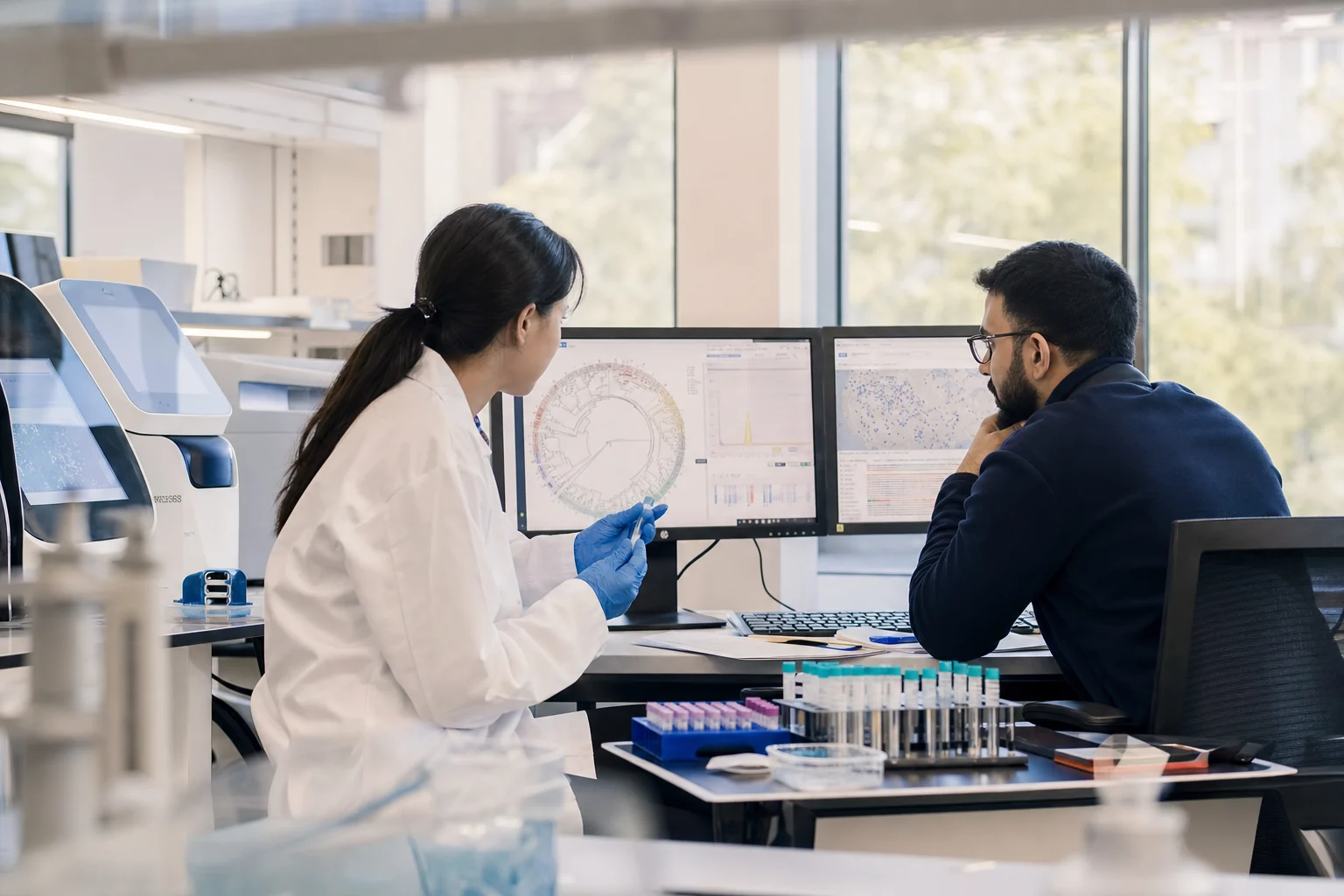
We are a dedicated team of experts  determined to enhance public health outcomes through the innovative implementation of NGS and bioinformatics technologies. Together, we draw upon experience from academic, governmental, and industry careers to deliver a world-leading service across a diverse range of microbial genomics applications, including infectious disease, food safety, molecular diagnostics, and environmental monitoring.

World Leading Expertise
Tailored Solutions
Collaborative Thinking
Opportunity & Scalability

Your Expert Partner in Pathogen Genomics

Pathogen genomics is crucial to many modern public health, diagnostics, environmental monitoring and food safety approaches. It enables the identification and tracking of disease-causing microbes while aiding in the development of effective treatments, policies and disease prevention strategies.

We Build Capacity

We Build Capacity

Next-generation sequencing (NGS) plays a pivotal role in pathogen genomics. It offers a means to read the genetic code of disease-causing microbes and it provides critical insights into microbial diversity, evolution and key virulence factors.

Here at Theiagen Genomics, we utilize the latest NGS approaches, develop helpful resources and train personnel to the highest level. We seamlessly integrate technology and build capacity in your workflows as your expert partner in pathogen genomics.

We Train Experts

Pathogen genomics requires highly technical expertise to be done well. That’s why we offer personalized training in the latest sequencing and bioinformatics technologies tailored to your needs.

Whether it’s on-site or remote, one hour or one week, our training experts can equip  your team with the skills they need to excel.

We Train Experts
Support

We Support you

Our comprehensive support goes beyond technical assistance – it includes a deep understanding of your data, providing flexible terms and generating key insights for workflow innovation.


Whether your project is large or small, we offer the same support regardless of your scale or throughput needs.

Team up with Theiagen today and leverage our expertise for your success.

Sample Analysis Procedure

Data Acquisition

Data Acquisition

Upload your data directly or import it from your sequencing instrument for a seamless transfer, or retrieve it from a public or private repository.

Genome Analysis

Genome Analysis

We piece together genetic information from your data to form a genome assembly. Then, we conduct Quality Control (QC), functional characterization, drug resistance and virulence prediction and pathogen specific characterization steps.

Data Acquisition

Report Generation

We generate comprehensive reports to serve as your project guide. We present your results and findings in an easy-to-read format that supports further research and proactive decision-making.

Data Acquisition

Phylogenetic Analysis

We map the evolutionary history and relationships between different organisms within your sample.  We guide you to evaluate pathogen risk and pinpoint optimal solutions.

Data Acquisition

Data Sharing

Share your data with the wider scientific community by depositing it into a public repository to ensure that your findings contribute to the broader body of knowledge. Our experts can help with the complex challenge to best practices.

Find Out What Tailored Analyses We Can Provide For Various Viruses, Fungi And Bacteria.

Pathogen Pipeline

Trusted by Peer-Reviewed Publications

Read about how our work has enabled peer-reviewed scientific papers.

Hologenomic analysis of rectal mucus sampling for detection of adenomatous polyps and colorectal cancer

"Colorectal cancer (CRC) is the fourth most common cancer and the third leading cause of cancer-related mortality worldwide, with incidence rising among younger populations. The significant clinical and economic burden highlights the need for minimally invasive technologies capable of detecting pre-malignant and early-stage disease."

Andrew J. Tock, Kamrun S. Patel, Emma Morales-Walker, Linglan Zhang, Chris Orthodoxou, Alasdair D. MacRitchie, Stephen Njoroge, Oladapo E. Olaniru, Guy Mozolowski, Inês Mendes, Dave J. Baker, Malvin Siew, Hannah N. Humphrey, Eleanor T. Walker-Davies, Frank McDermott, Sue Spencer, Susan Bird, Katerina-Vanessa Savva, Christopher Cunningham, Hannah Rottenburg, Heena Sisodia, Nick J. Battersby, Gareth A. R. Jones, Jon Lacy-Colson, Alice E. Baggaley, Christopher J. Peters, Andrew Dodd, Kiran Kang, Chris Hamon, Ana Crespillo-Casado, Erica Law, Megan Sands, Hugo Lywood, Andrew J. Page, Ian Daniels & Daniel Wise

Andrew J. Tock, Kamrun S. Patel, Emma Morales-Walker, Linglan Zhang, Chris Orthodoxou, Alasdair D. MacRitchie, Stephen Njoroge, Oladapo E. Olaniru, Guy Mozolowski, Inês Mendes, Dave J. Baker, Malvin Siew, Hannah N. Humphrey, Eleanor T. Walker-Davies, Frank McDermott, Sue Spencer, Susan Bird, Katerina-Vanessa Savva, Christopher Cunningham, Hannah Rottenburg, Heena Sisodia, Nick J. Battersby, Gareth A. R. Jones, Jon Lacy-Colson, Alice E. Baggaley, Christopher J. Peters, Andrew Dodd, Kiran Kang, Chris Hamon, Ana Crespillo-Casado, Erica Law, Megan Sands, Hugo Lywood, Andrew J. Page, Ian Daniels & Daniel Wise

Hologenomic analysis of rectal mucus sampling for detection of adenomatous polyps and colorectal cancer

"Colorectal cancer (CRC) is the fourth most common cancer and the third leading cause of cancer-related mortality worldwide, with incidence rising among younger populations. The significant clinical and economic burden highlights the need for minimally invasive technologies capable of detecting pre-malignant and early-stage disease."

Andrew J. Tock, Kamrun S. Patel, Emma Morales-Walker, Linglan Zhang, Chris Orthodoxou, Alasdair D. MacRitchie, Stephen Njoroge, Oladapo E. Olaniru, Guy Mozolowski, Inês Mendes, Dave J. Baker, Malvin Siew, Hannah N. Humphrey, Eleanor T. Walker-Davies, Frank McDermott, Sue Spencer, Susan Bird, Katerina-Vanessa Savva, Christopher Cunningham, Hannah Rottenburg, Heena Sisodia, Nick J. Battersby, Gareth A. R. Jones, Jon Lacy-Colson, Alice E. Baggaley, Christopher J. Peters, Andrew Dodd, Kiran Kang, Chris Hamon, Ana Crespillo-Casado, Erica Law, Megan Sands, Hugo Lywood, Andrew J. Page, Ian Daniels & Daniel Wise

Development of an amplicon-based sequencing approach in response to the global emergence of mpox

"The 2022 multicountry mpox outbreak concurrent with the ongoing Coronavirus Disease 2019 (COVID-19) pandemic further highlighted the need for genomic surveillance and rapid pathogen whole-genome sequencing. While metagenomic sequencing approaches have been used to sequence many of the early mpox infections, these methods are resource intensive and require samples with high viral DNA concentrations."

Chen NF, Chaguza C, Gagne L, Doucette M, Smole S, Buzby E, Hall J, Ash S, Harrington R, Cofsky S, Clancy S, Kapsak CJ, Sevinsky J, Libuit K, Park DJ, Hemarajata P, Garrigues JM, Green NM, Sierra-Patev S, Carpenter-Azevedo K, Huard RC, Pearson C, Incekara K, Nishimura C, Huang JP, Gagnon E, Reever E, Razeq J, Muyombwe A, Borges V, Ferreira R, Sobral D, Duarte S, Santos D, Vieira L, Gomes JP, Aquino C, Savino IM, Felton K, Bajwa M, Hayward N, Miller H, Naumann A, Allman R, Greer N, Fall A, Mostafa HH, McHugh MP, Maloney DM, Dewar R, Kenicer J, Parker A, Mathers K, Wild J, Cotton S, Templeton KE, Churchwell G, Lee PA, Pedrosa M, McGruder B, Schmedes S, Plumb MR, Wang X, Barcellos RB, Godinho FM, Salvato RS, Ceniseros A, Breban MI, Grubaugh ND, Gallagher GR, Vogels CB

Chen NF, Chaguza C, Gagne L, Doucette M, Smole S, Buzby E, Hall J, Ash S, Harrington R, Cofsky S, Clancy S, Kapsak CJ, Sevinsky J, Libuit K, Park DJ, Hemarajata P, Garrigues JM, Green NM, Sierra-Patev S, Carpenter-Azevedo K, Huard RC, Pearson C, Incekara K, Nishimura C, Huang JP, Gagnon E, Reever E, Razeq J, Muyombwe A, Borges V, Ferreira R, Sobral D, Duarte S, Santos D, Vieira L, Gomes JP, Aquino C, Savino IM, Felton K, Bajwa M, Hayward N, Miller H, Naumann A, Allman R, Greer N, Fall A, Mostafa HH, McHugh MP, Maloney DM, Dewar R, Kenicer J, Parker A, Mathers K, Wild J, Cotton S, Templeton KE, Churchwell G, Lee PA, Pedrosa M, McGruder B, Schmedes S, Plumb MR, Wang X, Barcellos RB, Godinho FM, Salvato RS, Ceniseros A, Breban MI, Grubaugh ND, Gallagher GR, Vogels CB

Development of an amplicon-based sequencing approach in response to the global emergence of mpox

"The 2022 multicountry mpox outbreak concurrent with the ongoing Coronavirus Disease 2019 (COVID-19) pandemic further highlighted the need for genomic surveillance and rapid pathogen whole-genome sequencing. While metagenomic sequencing approaches have been used to sequence many of the early mpox infections, these methods are resource intensive and require samples with high viral DNA concentrations."

Chen NF, Chaguza C, Gagne L, Doucette M, Smole S, Buzby E, Hall J, Ash S, Harrington R, Cofsky S, Clancy S, Kapsak CJ, Sevinsky J, Libuit K, Park DJ, Hemarajata P, Garrigues JM, Green NM, Sierra-Patev S, Carpenter-Azevedo K, Huard RC, Pearson C, Incekara K, Nishimura C, Huang JP, Gagnon E, Reever E, Razeq J, Muyombwe A, Borges V, Ferreira R, Sobral D, Duarte S, Santos D, Vieira L, Gomes JP, Aquino C, Savino IM, Felton K, Bajwa M, Hayward N, Miller H, Naumann A, Allman R, Greer N, Fall A, Mostafa HH, McHugh MP, Maloney DM, Dewar R, Kenicer J, Parker A, Mathers K, Wild J, Cotton S, Templeton KE, Churchwell G, Lee PA, Pedrosa M, McGruder B, Schmedes S, Plumb MR, Wang X, Barcellos RB, Godinho FM, Salvato RS, Ceniseros A, Breban MI, Grubaugh ND, Gallagher GR, Vogels CB

Rapid Lineage Assignment of Severe Acute Respiratory Syndrome Coronavirus 2 Cases through Automated Library Preparation, Sequencing, and Bioinformatic Analysis

"The coronavirus disease 2019 (COVID-19) pandemic has provided a stage to illustrate that there is considerable value in obtaining rapid, whole-genome–based information about pathogens. This article describes the utility of a commercially available, automated severe acute respiratory syndrome associated coronavirus 2 (SARS-CoV-2) library preparation, genome sequencing, and a bioinformatics analysis pipeline to provide rapid, near–real-time SARS-CoV-2 variant description."

Gorzalski AJ, Kerwin H, Verma S, Hess DC, Sevinsky J, Libuit K, Vlasova-St. Louis I, Siao D, Siao L, Buñuel D, Van Hooser S, Pandori MW

Gorzalski AJ, Kerwin H, Verma S, Hess DC, Sevinsky J, Libuit K, Vlasova-St. Louis I, Siao D, Siao L, Buñuel D, Van Hooser S, Pandori MW

Rapid Lineage Assignment of Severe Acute Respiratory Syndrome Coronavirus 2 Cases through Automated Library Preparation, Sequencing, and Bioinformatic Analysis

"The coronavirus disease 2019 (COVID-19) pandemic has provided a stage to illustrate that there is considerable value in obtaining rapid, whole-genome–based information about pathogens. This article describes the utility of a commercially available, automated severe acute respiratory syndrome associated coronavirus 2 (SARS-CoV-2) library preparation, genome sequencing, and a bioinformatics analysis pipeline to provide rapid, near–real-time SARS-CoV-2 variant description."

Gorzalski AJ, Kerwin H, Verma S, Hess DC, Sevinsky J, Libuit K, Vlasova-St. Louis I, Siao D, Siao L, Buñuel D, Van Hooser S, Pandori MW

GAMBIT (Genomic Approximation Method for Bacterial Identification and Tracking): A methodology to rapidly leverage whole genome sequencing of bacterial isolates for clinical identification

"Whole genome sequencing (WGS) of clinical bacterial isolates has the potential to transform the fields of diagnostics and public health. To realize this potential, bioinformatic software that reports identification results needs to be developed that meets the quality standards of a diagnostic test. We developed GAMBIT (Genomic Approximation Method for Bacterial Identification and Tracking) using k-mer based strategies for identification of bacteria based on WGS reads."

Lumpe J, Gumbleton L, Gorzalski A, Libuit K, Varghese V, Lloyd T, Tadros F, Arsimendi T, Wagner E, Stephens C, Sevinsky J, Hess D, Pandori M

Lumpe J, Gumbleton L, Gorzalski A, Libuit K, Varghese V, Lloyd T, Tadros F, Arsimendi T, Wagner E, Stephens C, Sevinsky J, Hess D, Pandori M

GAMBIT (Genomic Approximation Method for Bacterial Identification and Tracking): A methodology to rapidly leverage whole genome sequencing of bacterial isolates for clinical identification

"Whole genome sequencing (WGS) of clinical bacterial isolates has the potential to transform the fields of diagnostics and public health. To realize this potential, bioinformatic software that reports identification results needs to be developed that meets the quality standards of a diagnostic test. We developed GAMBIT (Genomic Approximation Method for Bacterial Identification and Tracking) using k-mer based strategies for identification of bacteria based on WGS reads."

Lumpe J, Gumbleton L, Gorzalski A, Libuit K, Varghese V, Lloyd T, Tadros F, Arsimendi T, Wagner E, Stephens C, Sevinsky J, Hess D, Pandori M

Rapid repeat infection of SARS-CoV-2 by two highly distinct delta-lineage viruses

"Cases of reinfection with SARS-CoV-2 are well-documented. Efforts to determine the frequency of the phenomenon have been made and have shown that the occurrence may be rare to date. The true incidence of reinfection is difficult to determine due to the possibility that secondary infections are harder to detect due to decreased or absent symptoms or less testing. The frequency of reinfection cases will increase over time, as more cases in the human population denotes more opportunities for the phenomenon, but also because genomic variation in the virus over the course of pandemic time can lead to variants that can evade immunities "

Gorzalski AJ, Boyles C, Sepcic V, Verma S, Sevinsky J, Libuit K, Van Hooser S, Pandori MW

Gorzalski AJ, Boyles C, Sepcic V, Verma S, Sevinsky J, Libuit K, Van Hooser S, Pandori MW

Rapid repeat infection of SARS-CoV-2 by two highly distinct delta-lineage viruses

"Cases of reinfection with SARS-CoV-2 are well-documented. Efforts to determine the frequency of the phenomenon have been made and have shown that the occurrence may be rare to date. The true incidence of reinfection is difficult to determine due to the possibility that secondary infections are harder to detect due to decreased or absent symptoms or less testing. The frequency of reinfection cases will increase over time, as more cases in the human population denotes more opportunities for the phenomenon, but also because genomic variation in the virus over the course of pandemic time can lead to variants that can evade immunities "

Gorzalski AJ, Boyles C, Sepcic V, Verma S, Sevinsky J, Libuit K, Van Hooser S, Pandori MW

Theiagen In the News

Explore our research and contributions in the field.

Stay in the Know

Sign up for our newsletter to stay up to date on the latest news and updates

Subscribe NowBlog